




Joburg Places Of Worship

Place Of worship in the City of Johannesburg

Discover the spiritual heart and cultural harmony of Johannesburg through its diverse places of worship. From majestic cathedrals and historic mosques to serene temples and vibrant synagogues, explore the sacred spaces that reflect the city’s rich faith traditions. Each place of worship tells a story of community, devotion, and unity – offering a window into the beliefs and values that have shaped Johannesburg’s spiritual landscape and continue to inspire its people today.

Mosques, Vrededorp (1930s)

The mosques of Vrededorp on 15th and 23rd Streets stand as symbols of faith and resilience in a community uprooted by apartheid in the 1970s. The 23rd Street Mosque, built in 1935 for the Shafi Malay community, features white walls with green trimmings and an adjoining madressa. The 15th Street Mosque, serving the Shufi Muslim community, has a single dome, arched windows, and a peaceful green interior. Together, they preserve the spiritual legacy of Vrededorp’s once-vibrant multicultural past.

Our Lady of the Cedars of Lebanon, Woodmead

Dedicated in 1991, Our Lady of the Cedars of Lebanon serves Johannesburg’s Maronite community, one of South Africa’s oldest Lebanese congregations. The cone-shaped shrine, with a revolving 2m-tall Virgin Mary statue, sits alongside the octagonal face-brick church within landscaped gardens. Its cave-like interior, stalactites, and biblical artwork create a meditative atmosphere. The site hosts 24-hour adoration prayers and remains a spiritual and cultural hub for the city’s Maronite Catholics, under the leadership of Father Nadim Abou Zeid.

Regina Mundi Catholic Church

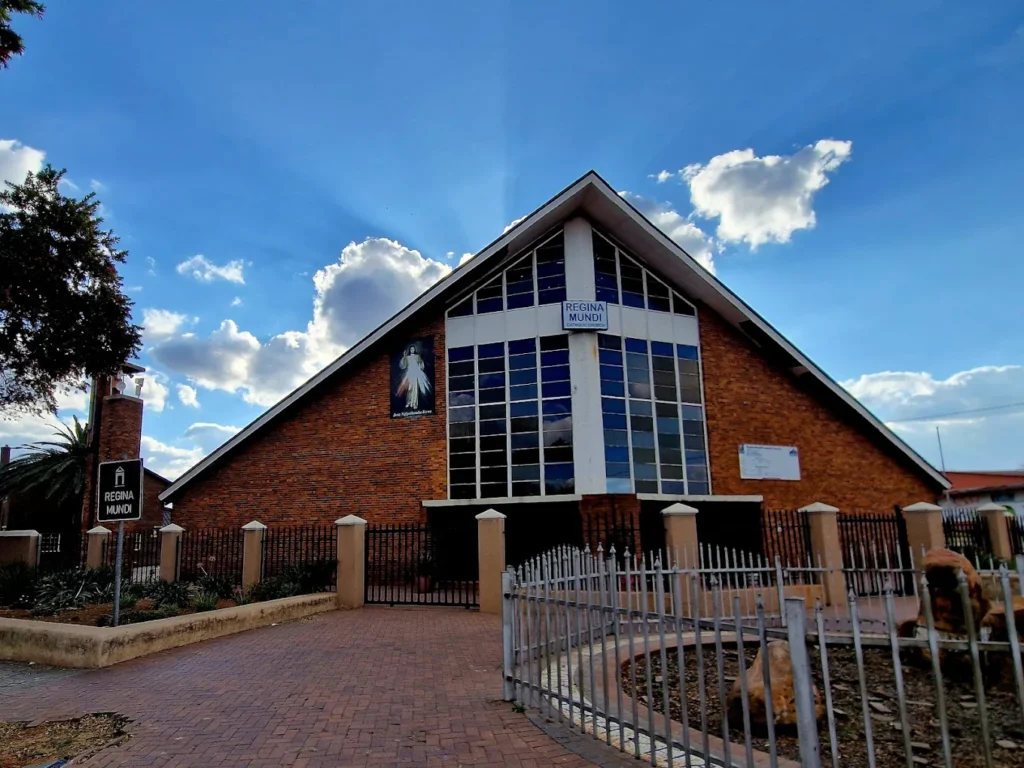
Built in 1964, Regina Mundi Catholic Church in Soweto is an A-framed landmark that witnessed the 1976 student uprising. Its walls still bear bullet marks from police attacks. The church seats 2,000 with room for 3,000 standing, and features a serene interior with blue and mustard glass windows, a stained glass window depicting Mary’s life, and a black Madonna. It remains a spiritual and historical hub, hosting annual 16 June commemorations and welcoming over 1,000 families and daily tourists.

St Alban’s Anglican Mission Church, Ferreirasdorp

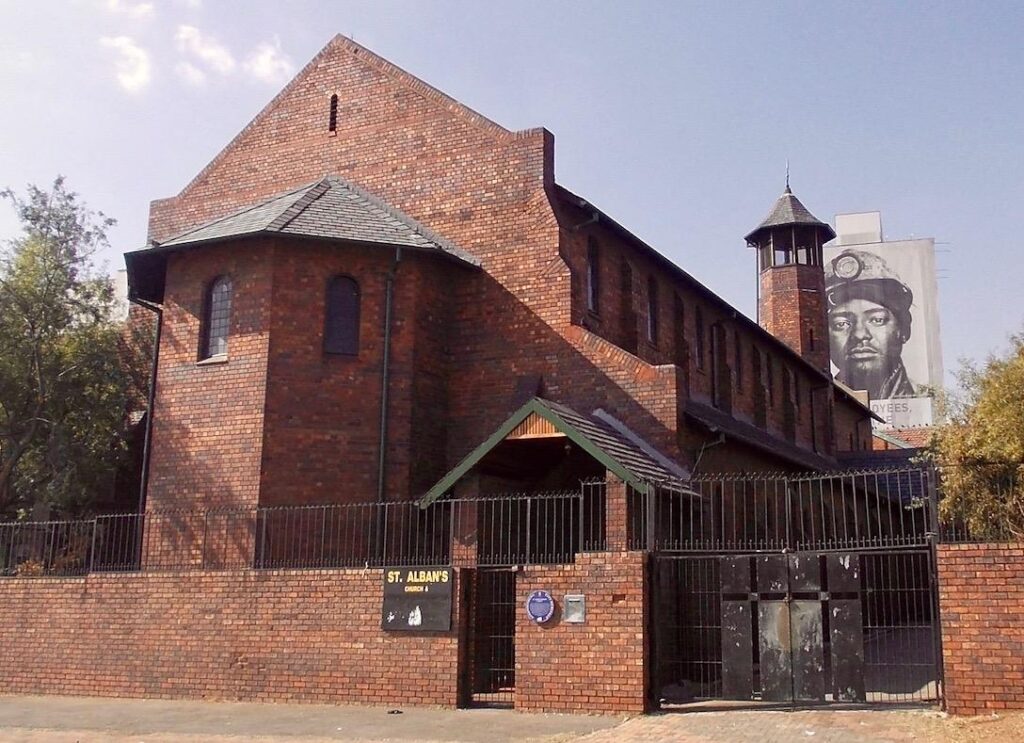
Built in 1928, St Alban’s Anglican Mission Church in Ferreirasdorp is a historic Anglican place of worship that has served its local community for nearly a century. It represents a period of Johannesburg’s growth when mission churches played key roles in religious, social, and community life, especially among under-served urban populations. The church is valued for its heritage, spiritual history, and its role in anchoring the community through changing urban landscapes.

St Anthony’s Catholic Church, Crown Mines

Completed in 1976, St Anthony’s Catholic Church in Crown Mines serves Johannesburg’s Portuguese community from nearby suburbs. Its striking blue and white tiled entrance, depicting Portuguese maritime history, leads to a marble altar beneath a vivid stained-glass pyramid. Gothic arches, embossed stone tiles, and soft lighting create a serene, reflective space. Amid its industrial surroundings, the church offers a peaceful retreat for worshippers, guided by Father Miguel Lemos and a small community of resident nuns.

​​St Mary’s Cathedral

St Mary’s Cathedral, consecrated in 1929, is a Romanesque-Italian masterpiece by Frank Fleming. Its soaring white columns, stained-glass windows, parquet floors, and pipe organ create a grand interior. The adjoining chapel honors 8,000 World War I dead. A hub for non-racial worship and anti-apartheid activism, it welcomed figures like Desmond Tutu and Oliver Tambo. Seating 2,000, the cathedral continues to draw diverse congregants, offering a spiritual and historical landmark in Johannesburg’s inner city.

​​St Mary’s the Less, Jeppestown

St Mary’s the Less, built in 1889, is Johannesburg’s oldest Anglican church. This modest red iron-roofed structure features wooden floors, a beamed ceiling, white benches, and arched stained-glass windows. Its small pipe organ stands by the apse, while a worn stone step hints at its age. Once central to Jeppestown’s posh suburb, the congregation now numbers around 45. Designed by Arthur and Walter Reid, the church remains a quiet, historic space for worship amid the evolving cityscape.

St Peter’s Priory, Rosettenville

Built in 1903 by architect Frank Fleming, St Peter’s Priory in Rosettenville is a red-brick Anglican church with elegant white arches, stained-glass windows, and wooden beams. Once a seminary for Black priests, it later became St Martin’s School and a retreat centre. Distinguished figures like Desmond Tutu and Oliver Tambo studied or taught here. Surrounded by peaceful gardens and historic chapels, the priory stands as a lasting symbol of faith, education, and South Africa’s liberation heritage.
Swaminarayan Mandir

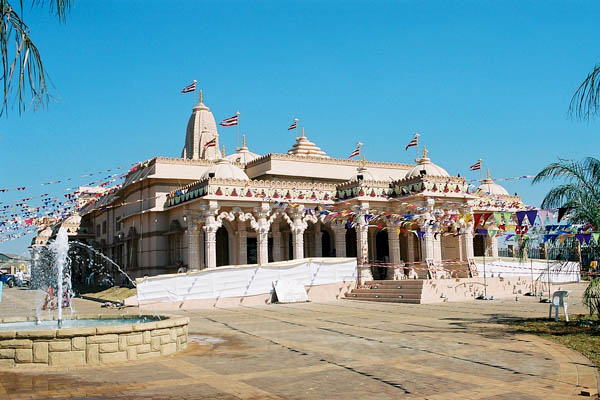
Opened in 2004, the Swaminarayan Mandir in Lenasia is a serene Hindu temple with polished marble floors, wide prayer spaces, and intricately carved pillars lining the walls and dome. The exterior is a rectangular structure with a central dome and decorative corner pillars, adorned with fluttering flags. Built entirely by the local community, the R7-million temple serves as a spiritual hub for South Africa’s Swaminarayan devotees, offering a peaceful retreat and a striking example of modern Hindu architecture.

Search

Looking for something? type in the search box below, and we will try to find it for you.