





Transport
Overview
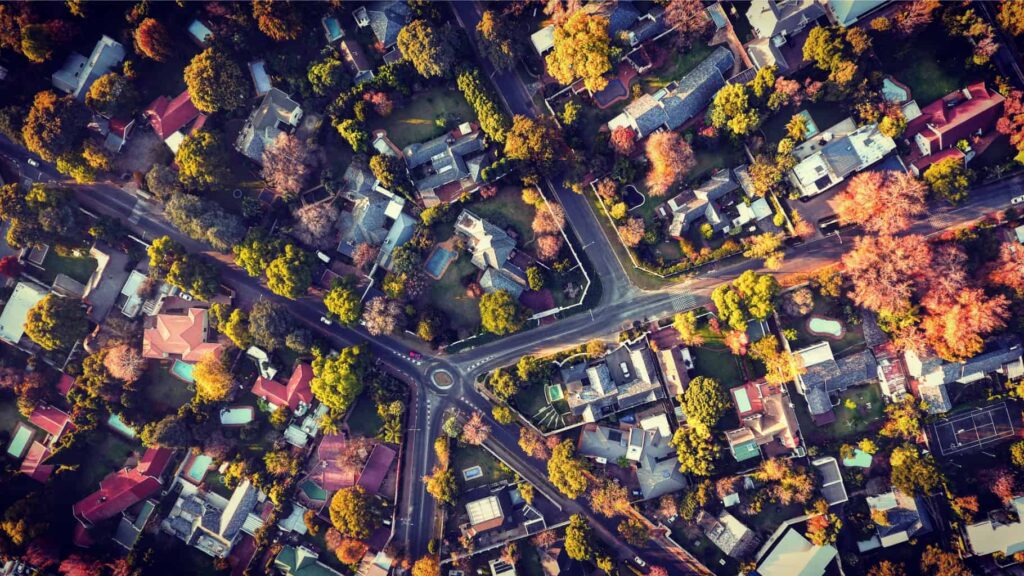
Spend any amount of time in Joburg’s rush hour traffic and you will get some idea of the huge number of vehicles on the city’s 9 000 kilometres of roads.
Transport shapes the way city dwellers live and ensures the survival of the city itself – taking residents from home to work, schools, hospitals, stadiums, service providers, shops and entertainment. And Joburg’s transportation department makes sure that public and private transport flows smoothly for the benefit of all users.
Feeder routes for Gautrain stations
Find out about the road-based feeder and distribution services to the Gautrain stations here.
It is responsible for the development of strategy and programmes and plans to direct and manage the private, business and public transport systems in Johannesburg towards a common, long-term City vision.
It plays a key role in realising this vision – to turn Johannesburg into a world-class African City – through co-ordinating transport around the city.
And it aims to achieve its goal by focusing on public transport and a well-developed and well-maintained roads and stormwater drainage infrastructure, able to connect businesses, people and places in a sustainable and cost-effective manner. In turn, this will boost standards of living and improve the overall competitiveness and growth of the local economy.
The department has a raft of responsibilities. It puts in place transport policy and public transport, plans and installs transport infrastructure, takes care of road and transport safety and runs the 2010 FIFA World Cup™ projects relating to transport.
To make sure that roads and public transport work towards the same goal of an efficient transport system, the department oversees two other City entities:
The JRA builds and maintains roads, bridges and stormwater systems and takes care of traffic management. Metrobus is the City’s public transport provider.
Unless otherwise instructed by the Council, the Transport Committee shall consider and make recommendations to Council on the following matters :
A. LEGISLATIVE ROLE
IDP, Budget and By-law Process
1.The consideration and oversight of the development of the IDP and budget in respect of the Transportation Department .
2.The consideration of the quarterly performance reports of the Transportation Department, JRA and Metrobus.
3. To exercise oversight over the development and implementation of all by-laws, strategies and policies of the Transportation Department
4.The consideration and oversight of draft tariffs, fees and charges in respect of transportation functions in the City.
B. PARTICIPATORY AND REPRESENTATIVE ROLE
1.Promote public participation in the Committee's activities
2. Ensure public consultation on any new by-law referred by Council and/or its Programming Committee.
3.Promote public participation in the key planning processes of the City as they relate to Transportation Department
4. Ensure that key issues of public concern relating to the Transportation Department are brought to the attention of Council.
C. OVERSIGHT ROLE
1.Exercise oversight over the quarterly and annual performance of the Transportation Department and its MOEs (Johannesburg Roads Agency and Metrobus).
2. Exercise oversight over any matter referred to the Committee by the Speaker, Council and/or its Programming Committee.
3.Exercise oversight on any matter based on its own initiative.
4.Exercise oversight over any matter or activity of the Transportation Department, JRA and Metrobus that will be of concern to the Committee.
5. Invite the MMC or any official of the Transportation Department to account on any matter of interest to the Committee.
D. REPORTS/RECOMMENDATIONS TO COUNCIL
1. To make recommendations to the Council as a result of the oversight process outlined above.
2. To report on the oversight visits of the Committee.
3. To report Quarterly and Annually on the Performance of the Committee.
4. To submit proposal/comments on Provincial and National Bills and proposed policies affecting local government.
Vision
The department's vision is a city with a safe and efficient transportation system, with a public transport focus, and a well-developed and well-maintained roads and stormwater infrastructure, able to connect businesses, people and places in a sustainable and cost-effective manner, thereby enhancing the standard of living and quality of life for all inhabitants as well as the overall competitiveness and growth of the local economy.
Directorates
There are three directorates within the transport department:
Strategic support
This directorate is responsible for IDP, Business Planning & Performance Monitoring, Management and Support.
Transportation planning and operations
This directorate is responsible for Public Transport Planning and Public Transport Operations.
Public transport planning - formulates policies, strategies and plans to regulate transport. This is done through the development of a transport model that covers all modes of transport, including public, passenger, private and freight transport.
The sub-directorate also raises funds and seeks grants from the government and other institutions and organisations to ensure that plans and projects can be implemented. It has two divisions, business transport and commuter transport.
Public transport operations - is concerned with the day-to-day operations of public transport, both buses and taxis, and works very closely with Metrobus and the various taxi associations.
It coordinates the commuter transport development support unit, set up in terms of the Minibus Taxi Type Act of 1997, which requires municipalities to constitute and oversee taxi liaison committees. These committees are made up of various taxi associations, the traffic department and the City. There are two divisions in this sub-directorate, public transport contracts and operations support and development.
Infrastructure and safety
This directorate is responsible for Infrastructure Projects, JRA Compliance and Safety and Information.
JRA compliance - makes sure the roads agency and public transport section work towards the same goal of an efficient transport system. It oversees two City entities through its two sub-directorates:
Johannesburg Roads Agency Compliance
Metrobus Compliance
Infrastructure projects - is responsible for infrastructure issues and traffic management in Johannesburg. Most of the work done in this sub-directorate is carried out by the Johannesburg Roads Agency.
It has two divisions, infrastructure and system management.
Policies and by-laws
There are a number of policies and by-laws governing transport in Joburg:
Authority to restrict access to a public place
Links to respective documents
- Parking grounds by-laws
- Metered taxi, minibus, minibus and bus by-laws
- Security Acces Restriction Policy
- Security Access Restrictions Policy: Explanatory Notes
- Sars Policy
- Chapter 7 of Section 45
- Complete Streets Design Manual Guideline
Complete street design manual guideline
In October 2010, the City of Johannesburg presented a report to the Mayoral Committee outlining a proposed new approach to ward-based safety with an emphasis on a safer street. Guideline Manual
Designation of commuter shelters
The City of Joburg has a responsibility to establish and designate ranks, holding areas, stops, shelters and lay-bys for the provision of public transport. The City will be rolling out new commuter shelters from October 2012 across the City.
Infrastructure projects
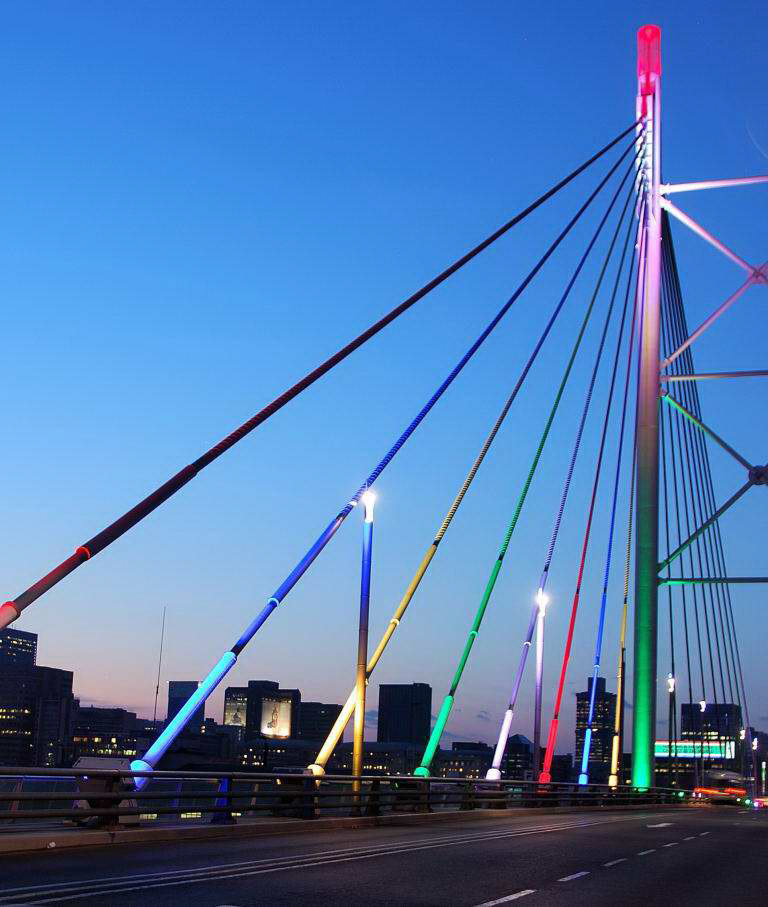
Major capital infrastructure projects completed or underway include the Nasrec transport hub and pedestrian walkway as well as the construction of various taxi ranks around Johannesburg.
Capex projects
Non-motorised transport
Non- Motorised Transport has been identified as a priority area at National, Provincial and Local Government levels and has the potential to become a feasible and sustainable transport mode in the City. The proposals outlined in the City's NMT framework document provide a planning framework for Non-Motorised Transport, provide a policy direction and highlight priority areas for the implementation of this network in the City.
Integrated Transport Plans
The Integrated Transport Plan (ITP) was a requirement of the Municipal Structures Act of 1998. It looks at all public transport services - minibus taxis, subsidised buses and rail - as well as private transport and freight transport. Operating licence strategy, rationalisation plans and the public transport plans were also considered in its formulation.
Transforming Johannesburg's public transport into a world-class system has been an elusive goal. However, with the impetus of the upcoming 2010 FIFA World Cup™ and the development of viable alternatives, a new vision of effective and sustainable public transport is beginning to take shape.
Rea Vaya Bus Rapid Transit scoping study
Rea Vaya Bus Rapid Transit (BRT) System
The Phase 1 overview is available in PDF format
The new plan looks at upgrading the Strategic Public Transport Network (SPTN) into a higher-quality public transport network using a Bus Rapid Transit (BRT) system. Known as Rea Vaya, the initiative is aimed at raising the performance and quality of the SPTN to a car-competitive level.
Transportation modelling
Working with the CSIR between July 2004 and June 2006, the transportation department drew up the Integration of the Development of Future Development Planning Scenarios. The aim was to investigate the development proposals in the City's Spatial Development Framework, and to look at the potential implications for the transport system.
Key to the plans are the cost of providing a viable public transport system; the capacity of the transport infrastructure; and the value of alternative development interventions. If necessary, some aspects of the Spatial Development Framework may be revised.
Scenarios were developed for the years 2010, 2020 and 2030, with the strongest focus on 2010.
Transportation safety
Road Traffic Accident Statictics
As its name implies, the Transport Safety Plan manages safety and security related to transport. Taking its cue from the Integrated Transport Plan, it seeks to improve service levels. The plan also gives a sectoral input into the City Safety Strategy.
It is a two-phased project - the first phase entailed the formulation of the Transportation Safety Management Information System, a database that stores transport safety and security data, linked to the City's geoinformation systems. Spatial analysis of safety and security for road and rail transport identified hazardous locations.
The main focus of the Transport Safety Plan is interventions based on the data found in the Transport Safety Management Information System. The safety plans and strategies were drawn up after a thorough analysis of accidents patterns and causes.
Three key strategies came out of the data analysis:
- Integration of information;
- Hazardous location improvement programme; and
- Road safety and security focus areas.
Travel demand management
The travel demand management programme looks at the increasing use of single occupant vehicles and the effect on congestion, energy and the environment. Based on the programme, two travel demand management measures were identified for implementation:
Drive share or carpooling initiative - lift-club schemes; and
Variable working hours initiative - flexi-time, staggered working hours, compressed and expanded workweeks.
In May 2006 the City submitted priority statements to the national Department of Transport for consideration for funding from the "set aside" Public Transport Infrastructure Fund (PTIF).
To receive funding, projects to be undertaken for the 2010 FIFA World Cup™ should primarily focus on public transport and should be legacy projects that will benefit citizens after the final whistle has blown.
In addition, a High-Level Transport Plan was developed to:
Review the current transport network and propose improvements in the context of world cup transport demands;
Outline the likely world cup spectator and official transport requirements;
Review stadium and precinct developments; and
Highlight critical issues.
This plan is being used as a basis for the development of high level public transport operational plans in preparation for the world cup.
A number of projects have been undertaken by the transport department in preparation for 2010:
High level public transport operational plans for Nasrec;
High level public transport operational plans for Ellis Park;
High level public transport operational plans for six of the eight official training venues;
Ellis Park and Nasrec SPTN links; and • Park-and-ride facilities.
Feeder routes for Gautrain stations
Find out about the road-based feeder and distribution services to the Gautrain stations here.
Key document
Gautrain Feeder and Distribution Services Study - Final Draft.
Deputy Director
Tel: 011 870 4517
Director
Tel: 011 870 4535/36
Director
Tel: 011 870 4535/36
Acting Director
Tel: 0 11 870 4517
Director
Tel: 011 870 4508/09