






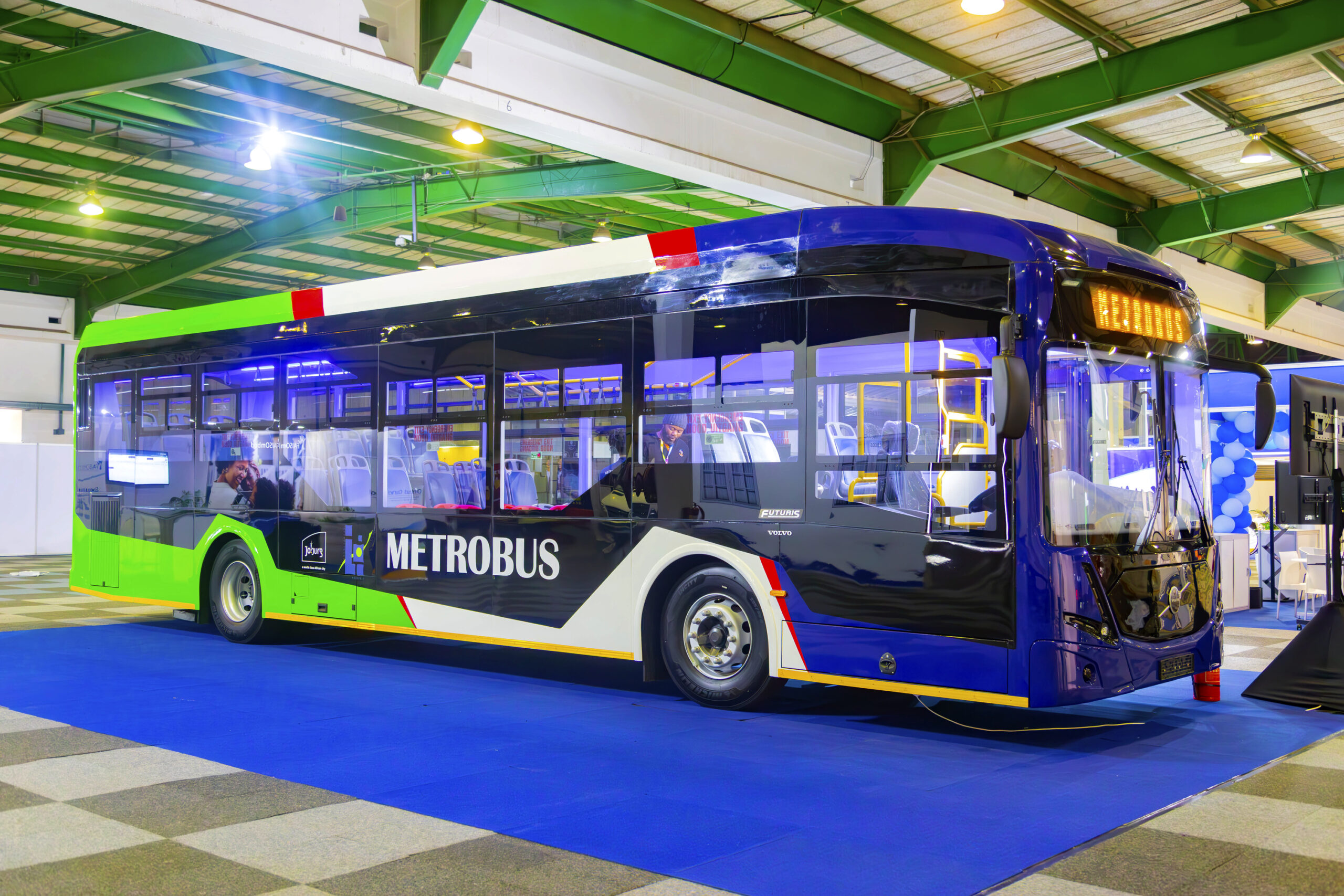
Metropolitan Bus has accelerated into its new financial year with fresh momentum and a bold vision to redefine how Johannesburg moves — a vision sharpened by the city’s preparations to host the upcoming G20 Summit. With global attention turning to Johannesburg, Metrobus is steadily making advances in smart, eco-friendly transport to ensure the city presents a modern, efficient and sustainable mobility network worthy of the international stage.
Positioned as a key driver in this transformation, the entity is leading the shift toward a more connected, technologically advanced and commuter-centred future.
Metrobus has already introduced several Intelligent Transport Systems, most notably the Automated Fare Collection (AFC) system, which completed a successful pilot and is now in full roll-out. Full implementation is expected by the middle of the 2025/26 financial year, marking a decisive move to a fully embedded cashless travel environment following the initial migration in 2024/25.
“The progress we are making is not only about modernising our operations, it’s about creating a seamless, commuter-centred experience that reflects a world-class city,” says Metrobus spokesperson Tshepo Nathan.
The introduction of Mobility-as-a-Service is already improving the daily experience of commuters, backed by the rollout of free Wi-Fi across buses, enhancing connectivity on the move and strengthening the appeal of public transport. With the AFC system becoming fully operational, Metrobus anticipates greater efficiency, improved revenue and an even smoother rider experience.
Metrobus’s plans are anchored in a broader vision for a less congested, more affordable and environmentally responsible transport future for Johannesburg. Public transport, the entity stresses, must help reduce household transport costs, protect road infrastructure, cut carbon emissions and improve residents’ work–life balance. With just 75 double-deck buses capable of removing over 5 000 cars from the road daily, the potential impact is significant.
“An efficiently run bus service improves lives and strengthens the city’s economy,” Nathan adds.
The 2025/26 Business Plan strengthens this focus, aligning Metrobus with the City’s strategic direction and Mayoral priorities — from safer communities and sustainable service delivery to infrastructure development, job creation, smart-city innovation, good governance and financial sustainability.
To advance these goals, Metrobus will prioritise investment-enabling initiatives, re-industrialisation, digital-economy support, improved social cohesion, strengthened public-sector capacity and a just energy transition.
Looking ahead, the entity will expand partnerships with higher-learning institutions, SETAs and both public and private transport stakeholders to deepen innovation, capacity and workforce development. Metrobus is also exploring operational strategies to ensure a fit-for-purpose, renewable-energy-powered fleet, improved technology platforms, strengthened infrastructure, employee wellness and robust stakeholder engagement
“All of these initiatives form part of our broader corporate strategy, which runs through to 2026/27 and positions Metrobus as a key driver of Johannesburg’s shift toward a smarter, more inclusive and more sustainable mobility ecosystem,” Nathan says.
Commuters can expect visible improvements — progress that will help Johannesburg shine as a capable, connected global city as it welcomes the world to the first G20 Summit on African soil.
Written by Sascha-Lee Joseph