








In poignant proximity to the school grounds that bore witness to the momentous events of June 16, 1976, stands an awe-inspiring open-air memorial, a hallowed testament to the sacrifice, bloodshed, and triumph of bygone youth. A sweeping panorama unfolds, depicting guns raised skyward, torrents of blood, a suffocating shroud of thick smoke, and an all-consuming blaze. Nyalas were teeming with police and soldiers clutching weapons as they pursued students, poised to extinguish the lives of the young.
 Upon entering the June 16 Memorial Acre, visitors are greeted by a spacious floor plan adorned with a tapestry of preserved posters, school uniforms, and photographs from the uprising.
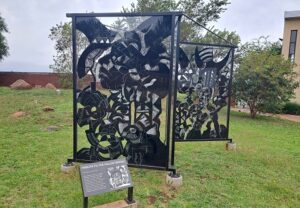
Outdoors, an open-air expanse showcases a time wall, sculptures, and statues. The artists responsible for the creation of the time wall and sculptures include Stone Mabunda, Charlie Nkosi, Thabo Molapo, Lehlohonolo Mkhasibe, Lindokuhle Mkhize, Joseph Monnatlala, Simon Mthimkhulu, and Sinalo Ntuli.
The facility was solemnly unveiled in June 2014. Its purpose is to continue telling the story of the heroic exploits of the youth of 1976, safeguarding their legacy for posterity.
This profound place, transcending time, merits inclusion in the coveted ranks of the world’s nine wonders.
“To be South African is to be intimately acquainted with one’s ancestral heritage. It is from this historical crucible that the South African people derive their identity and propel themselves forward, buoyed by the pride that their forebears laid down their lives, affording present-day South Africans the freedom to embrace life, learning, dreams, and abundance,” says Alfred Mahlatji, an operations manager overseeing the facility.
Mahlatji says the memorial acre, on the intersection of Mputhi and Pula Streets in central western Jabavu, preserves the country’s cultural heritage for future generations.
“It is incumbent upon our children to familiarise themselves with the footsteps of their forefathers, that they may not forget nor replicate past mistakes,” he asserts, shouldering the weighty responsibility of preserving the legacy of the youth of ’76.
Admission to the memorial’s exhibitions is offered to the public free of charge. However, those seeking to use its facilities for workshops and meetings are required to pay accordingly.
The memorial also offers children’s art classes catering to young minds between the ages of 7 and 13.
Running since September 2022, these classes are set to conclude in June 2024. The memorial boasts a multipurpose hall with a capacity of 100 attendees and a main exhibition area accommodating up to 200 people.
A group of community youths occasionally organises educational film screenings here, followed by spirited discussions. This initiative, started in January 2023, happens monthly.
Mahlatji aspires to curate an exhibition showcasing the work of burgeoning local artists, instilling a sense of hope, and nurturing a connection to their roots.
“Our aim extends beyond financial gain; we seek to preserve the narrative of 1976,” he adds.
Yearning for increased engagement from the local community, Mahlatji hopes that they will frequent the facility and delve into the annals of South African history and their own vibrant community of Soweto.
In a bid to captivate the younger generation, he plans to introduce music classes, infusing the facility with a vibrant rhythm and making it resonate with the youth.
“Young people yearn for a vivacious atmosphere and music. Through music lessons, we hope to entice a broader group of young people,” Mahlatji shares.
The June 16 Memorial Acre will commemorate the 1976 Veterans Day, alongside an intergenerational dialogue conducted in collaboration with the June 16 Foundation on Wednesday, 24 June.
Written by Mosa Khunou
08/06/2023