







In the heart of Joburg’s bustling Newtown precinct, the Workers’ Museum, a cultural beacon, stands as a testament to the City’s labour history. At its helm is Belinda Hlaka, also known as Mabiza, a cultural activist, survivor, and curator who has dedicated her entire life to preserving the legacy of workers and empowering women in her community. With a background steeped in the arts and a commitment to education, Hlaka’s journey is one of resilience, creativity, and the relentless pursuit of positive change.
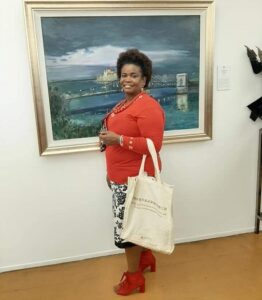 Originally from the vibrant Kagiso township of Mogale City, 57-year-old Hlaka’s story is deeply rooted in the South African landscape.
The devoted mother of three has risen through the ranks to lead as curator at the Workers’ Museum.
Her diligence and dedication are palpable in her role as shop steward and curator, where she orchestrates the narrative of the Workers’ Museum as a site of labour migration.
It is her passion for local artists’ creativity that fuels her drive to share knowledge, uplift Joburg’s residents through the creative industry, and ensure that the history of workers remains etched in the nation’s collective memory.
“I am dedicated to ensuring that both South Africa and the world never forget the pivotal role workers played in our nation’s history.”
Hlaka says the Worker’s Museum, an esteemed heritage institution, stands as a bridge between the past and present, celebrating the contributions of workers to South Africa’s history.
Her devotion to this mission is matched only by her commitment to her role as a single mother and an engaged member of society.
Her journey into the arts and culture sphere began in the 1990s, when she founded the Kagiso Arts Centre.
Armed with a fine arts degree from the University of South Africa, she later ventured into the cultural landscape as a cultural officer in Soweto in 1995.
Over the past two decades, she has worked tirelessly to elevate artists through exhibitions and art, notably commissioning a striking “open arms” sculpture for the Arts Alive Festival in partnership with the Hector Pietersen Memorial Museum in 2005.
“That was one of the highlights of my career. Artists used to protest apartheid. This sculpture was an acknowledgment of their contribution to the struggle,” she explains.
In 2010, following a stint at the Roodepoort Museum, Hlaka’s path led to the Workers’ Museum, where she assumed the mantle of highlighting the historical significance of migration and migrant labour in shaping Joburg’s narrative.
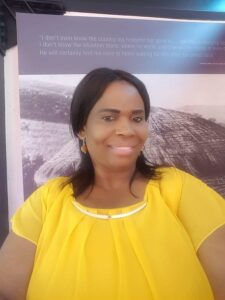 “I’ve been driven to highlight the historical significance of migration and migrant labour in shaping Johannesburg and South Africa’s narrative,” she adds.
Collaborations with Constitution Hill, Wits University’s Migrant Centre, and Khanya College have provided platforms for addressing pressing issues.
Workshops and exhibitions serve as conduits for sharing the rich stories that define Johannesburg.
“I put in a lot of effort to publicise cultural activities at the museum and educate underserved Black communities about what museums do. We hold theatre productions, fashion shows, exhibitions, cultural events, and other arts and culture events,” she says.
As South Africa commemorates the 67th anniversary of the women’s march to the Union Buildings, Hlaka’s journey takes on added significance.
?Reflecting on her role as a woman, she says she’ll continue to champion the importance of women’s presence in their respective fields.
“Women’s month is important in our country as it commemorates and pays tribute to thousands of women who marched to the Union Buildings on August 9, 1956, in protest at the extension of pass laws to women. For us, it is to continue where they left off and be brave enough to take the baton and move forward without fear of intimidation.”
Scarred by the trials of a brutal era in her own life, she uses her experiences to uplift others. “I am looking at challenges we face every day such as parenting, domestic violence, sexual harassment in the workplace, unequal pay, and empowering a girl child, and these are still moving at a snail’s pace,” Hlaka laments.
Her message is one of empowerment and solidarity, emphasising the progress achieved by women while acknowledging the ongoing challenges they face.
“My passion lies in empowering women, and I measure success by the inclusion of women in an environment once dominated by men. Breaking these barriers brings me immense joy, as I inspire women in my field to speak up and exceed expectations with exceptional service. My consistent advice to women is to exemplify a code of good practice,” she says.
As retirement beckons on the horizon, Hlaka’s ambitions remain undimmed. With a vision for a legacy that catalyses positive change, fosters innovation, promotes inclusivity, and spurs community growth, she envisions an enduring impact on Joburg’s residents for generations to come.
“I aspire for my legacy to be a catalyst of positive change in the City of Johannesburg. A legacy that fosters innovation, inclusivity, and community growth, creating a lasting impact on the lives of its residents for generations to come.”
In her journey, Hlaka exemplifies the power of an individual’s dedication to transforming their community and safeguarding its history.