










From general health check-ups to faecal sampling for parasites or the day-to-day clinical cases that arise at the Johannesburg Zoo, no two days are ever the same for Johannesburg City Parks and Zoo (JCPZ) associate veterinarian Dr Gareth Hunter. Hunter is one of three vets at the Johannesburg Zoo who works on the local animals that fall under JCPZ. They often also help out Johannesburg Metropolitan Police Department with its horses and dogs, as well as estates around the city that are home to blue cranes and other birds that belong to JCPZ.
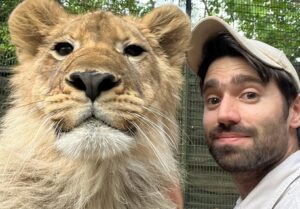 “As a vet each and every work day is different. No animal can be treated the same because their conditions, health and well-being are all different,” he says.
He says business as usual for him includes arriving at work and checking in with the animals treated at the zoo hospital. He then heads off to do his morning rounds which entails visiting all the animal patients.
“On these visits we check whether the animals are becoming stronger and recovering or whether their conditions have remained the same and there is a need for further or repeat treatment,” he says.
Hunter then leads the morning meeting with the veterinary staff to discuss updates on the different cases which ultimately varies from day to day. It is seldom that the team is able to schedule certain treatments on animals because it depends on their state when they are checked.
“Some of the scheduling we can do as vets is health checks on all the animals at the zoo. This also varies largely depending on the species. Certain animals need more regular checks than others. Like the tigers we can do a full health check once a year,” he says.
Hunter says the animals that have already been diagnosed with problems are checked on a more regular basis.
“The zoo staff works as one large team. There are zookeepers who are responsible for different animals in different sections of the zoo. They all do daily checks on the animals and notify us if an animal is behaving strangely, limping or being unresponsive among many other alerting behaviours,” he says.
Depending on the feedback from the zookeepers and after a thorough check by the vet, they then decide whether medication can be administered orally or by other means or whether the animal has to be immobilised and taken to the zoo hospital for x-rays and further diagnostic work.
“Although I have always wanted to work in the zoological space with wild animals and in the environment, it hasn’t always been an easy experience especially when the animals have little to no chance of survival,” says Hunter.
Knowing when an animal is in a condition to be treated by medication, and knowing when you’re doing it a service by euthanising is still a tough decision to make for Hunter.
Although he holds a BSc Honours and Veterinary degree, the qualifications did not teach him how to emotionally detach himself from the animals. It’s a skill he has developed over time.
“Being a vet is often romanticised to saving the lives of animals. However, we are often faced with a less desirable outcomes of animals losing their lives. The longer you serve in this field the better it becomes to do the right thing depending on the quality of life the animal will have,” says Hunter.
Just like in humans, some time no matter what you do or what medicine you give, it just doesn’t work and the animal is too compromised.
“When this is the case, I remind myself that I’ve done all I can in my professional capacity and done everything in principle to treat the animals,” says Hunter.
Hunter says that one of his favourite animals he has treated at the zoo is one of the oldest female chimpanzee called Daisy.
“We had to administer the medicine twice a day and because Daisy is such a clever species, she knew that it was time for her meds and we ended up hiding it in jelly. I really grew attached after spending so much of my day with her. We really developed a bond,” he says.
Hunter says some of his other favourite animals is the leopard and the female white rhino who enjoys being scratched.
“Being a veterinarian gives me the opportunity to work with animals in a vulnerable state. Being able to save them is the highlight of each day, but being able to ensure ease of pain no matter what, makes everything worthwhile,” he says.
Written by Sascha-Lee Joseph
02/06/2023