

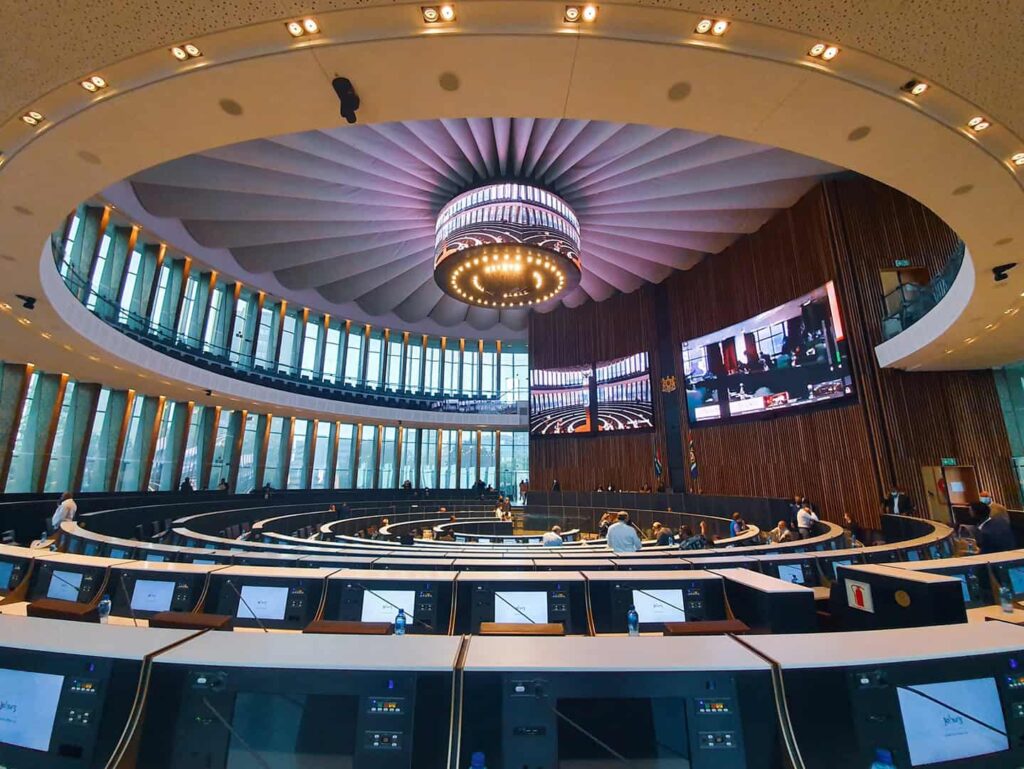







The City of Johannesburg’s new Intergovernmental Relations (IGR) strategy is now ready for implementation, aiming to foster effective governance and policy alignment across various levels of government.
Last year, the City conducted a review of its IGR Strategy to ensure its continued relevance to current priorities, goals, and vision. Pamela Chibi, the Acting Deputy Director of the Group Strategy, Policy Coordination & Relations (GSPCR) IGR, emphasises the City’s recognition of the importance of IGR for service delivery and development. Regular reviews of the IGR Strategy ensure its alignment with the City’s constitutional and legal obligations for cooperative governance while also capitalising on strategic opportunities through partnerships and resource sharing.
Chibi says the Intergovernmental Relations (IGR) strategy was developed to position Johannesburg as a thriving, resilient, and inclusive city, where local administration enhances service delivery and urban planning through integrated, cooperative, and clearly defined relationships with other governmental bodies and partners, ultimately improving the quality of life for residents.
“The core of the IGR strategy is to enhance stakeholder engagement through collaboration between municipalities, national and provincial government departments, municipal entities, and community organisations to address shared challenges,” says Chibi.
The implementation can be divided into three strategic areas: consolidating and embedding IGR, deepening and focusing IGR, and expanding IGR by exploring new partnerships, enhancing existing relationships, and fostering increased collaboration and knowledge sharing.
Mmanapo Moloi, an Intergovernmental Relations Specialist in the department, underscores the importance of promoting, communicating, and consistently implementing the IGR approach across the city. The strategy is informed by several legislative frameworks, including the Intergovernmental Relations Framework Act 13 of 2005, and is guided by a vision of cooperation and clearly defined roles. This vision aligns closely with the outcomes and approach outlined in the Integrated Development Plan (IDP) and the Growth and Development Strategy (GDS) 2040.
Moloi highlights the need to develop IGR priorities specifically geared towards achieving the strategic objectives of the IDP, ensuring that the City’s goals are effectively met. She also stresses the importance of clearly articulating the general context of IGR within the City and its impact on the City’s core business of service delivery and development. Furthermore, Moloi advocates for a shift from procedural IGR, which primarily involves participation in IGR structures, to a results-based approach.
This approach should focus on IGR that delivers clear value for the City, including securing resource allocations, initiating joint projects with other spheres of government, and addressing policy bottlenecks that may hinder progress.
Chibi concludes by highlighting the team’s pride in the innovative strategy crafted, which not only enhances accountability but also provides a robust framework for monitoring citywide projects and programmes, safeguarding partnerships from potential disruptions. Chibi anticipates that the strategy will serve as a cornerstone in cementing collective efforts.
Written by Sascha-Lee Joseph
06/09/2024
YouTube: https://www.youtube.com/@CityOfJoburgZA/videos
Joburg Pulse Radio: https://s3.radio.co/s349cd1429/listen