







With a slew of new public art projects on the horizon, the City of Johannesburg in all its artistic splendour, is not finished with enhancing and commissioning new immovable historical heritage. Johannesburg is peppered with an assortment of life-size sculptures and artworks made from materials such as bronze, concrete, wire and mosaic.
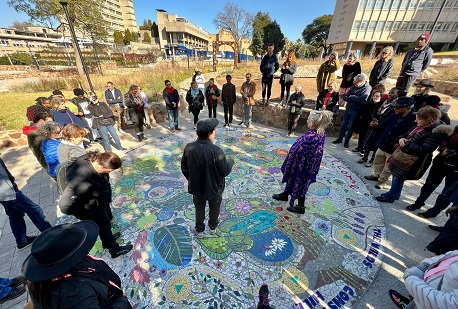
The history of political activists and leaders is reflected through architecture and street art, cutting a dash in the urban streetscape. Heritage places and public art that mark the vibrant streets of Joburg have the makings of a great cultural destination.
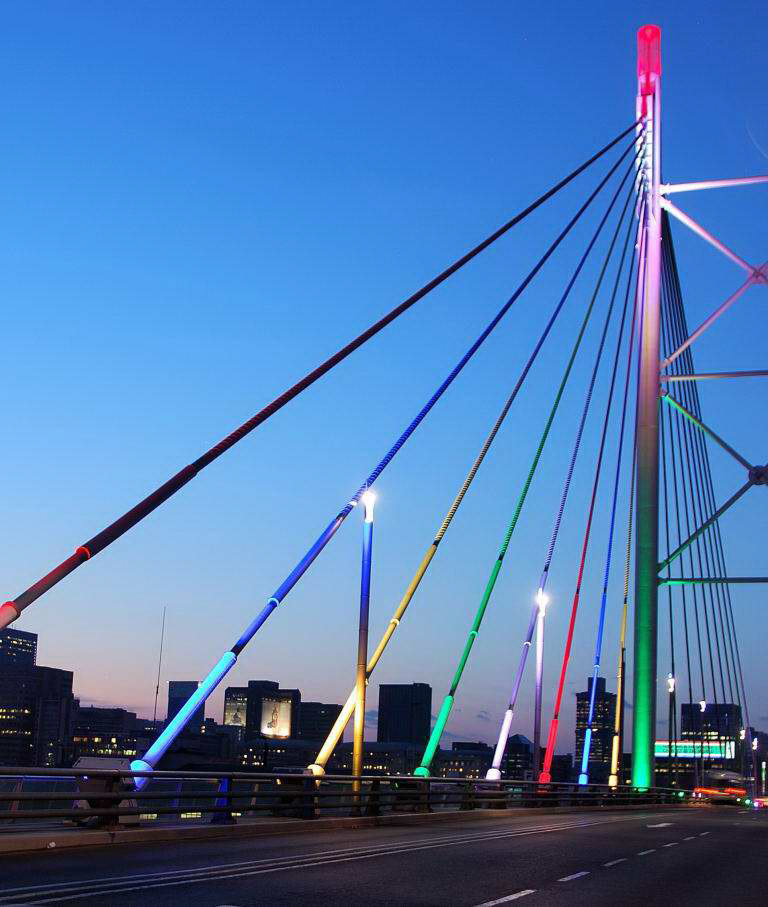
Among a plethora of sculptures and statues adorning the streets of Johannesburg are late singer supreme Brenda Fassie’s and horn man extraordinaire Kippie Moeketsi’s as well as the Newtown Heads, which is a collection of hundreds of wood carvings at the Newtown Cultural precinct, the Firewalker on the Queen Elizabeth Bridge; the Mineworkers’ Monument and the majestic Eland in Braamfontein; the Gandhi statue in the Joburg CBD and Nelson Mandela’s shadow boxer outside the magistrate’s court, to list a few.
The historical heritage and public art that endow the vibrant streets of Johannesburg are undoubtedly what distinguishes this golden city from its African peers.
Eric Itzkin, the Head of Heritage in the City’s Directorate of Arts, Culture and Heritage, says some of the new public art projects in the pipeline include a blue heritage plaque to be unveiled at the first post office on Mooki Street in Orlando East, Soweto.
The 50-year-old Avalon Cemetery, where several political activists are interred on its grounds, will also see the unveiling of a few public art installations next year. Dr Abu Baker Asvat; Joe Slovo; Hector Pieterson; Hastings Ndlovu; Helen Joseph; Lilian Ngoyi; and Tsietsi Mashinini as well as the marchers and victims of the June 16 Soweto Youth Uprising are among notable figures buried here.
The City and the Johannesburg Heritage Foundation have awarded Beyers Naude’s Greenside House a blue heritage plaque, a symbol that helps identify historic and significant buildings and sites. Itzkin says this broadens people’s appreciation of the area and connects it to noteworthy events.
Sophiatown, where forced removals occurred in 1955, will receive a lot of attention. Today, only a few original buildings and sites remain, including the Anglican Church, St Joseph’s Home, and the House of Dr Alfred Xuma. The goal is to turn Dr Xuma’s house into a museum to aid in bringing heritage tours to Sophiatown.
Itzkin’s primary focus is on preserving and promoting historical sites and buildings throughout Johannesburg, as well as maintaining public art and commissioning new artwork. This is based on the City’s public art policy, which was developed in 2006.
Itzkin believes public art improves communities, attracts investment, and creates jobs. “The idea is to enhance public spaces and make them more attractive and appealing and to promote creativity in the cultural industry.”
Another project on the horizon is the renovation of Diagonal Square in downtown Joburg, which will be adorned with new artwork. A formal request for work samples has been issued to local artists. The square features a tribute to struggle couple Walter and Albertina Sisulu, with a sculpture depicting their love and resilience. In addition, the City aims to increase awareness of the Noordgesig Artworks programme and create a digital repository of public art.
Itzkin says it’s important to preserve history through art because it gives a sense of meaning and identity. “Joburg has brought together people from all over the country and different parts of the world. It’s the most cosmopolitan city in the country and probably in Africa. I think we should celebrate that diversity and have a sense of where we come from as a nation.”
He adds that a lot of South Africa’s history has to do with division and oppression and the fight against it.
“People were divided by colonial, economic and apartheid laws. Joburg was the centre of the struggle against those inequalities. It hasn’t all been overcome, but many have struggled and sacrificed, some with imprisonment and others with their lives. We should be aware of that to value what they fought for.”
He believes every Joburger has a story to share, and that’s ultimately what historical heritage is about.
Written by Brümilda Swartbooi
29/09/2022