



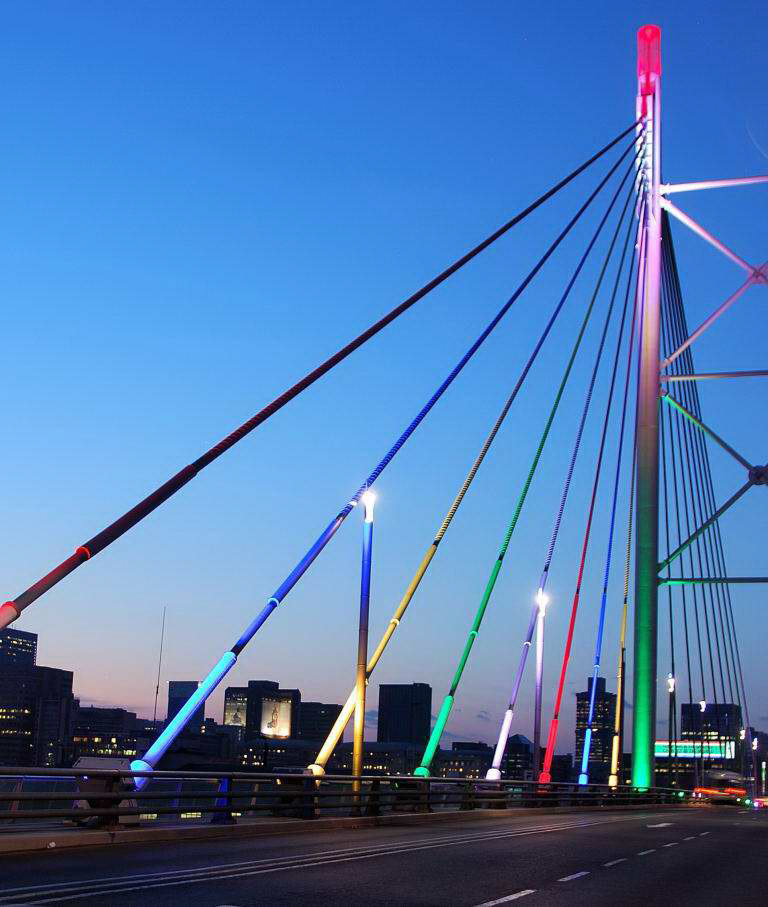
 There’s a joke doing the rounds on social media that you can’t be looking for love in Jozi as it’s a strictly business-only city. But there’s more to this concrete jungle, which celebrates its 136th birthday this year. Known throughout the world as Joburg, Egoli, Mjiba, Joeys or Jozi, it’s impossible not to marvel how fast this mighty metropolis sprang up on the Highveld plains in 1886 and how it has continued to play a pivotal role in our country’s history and economy.
On the basis of accolades for Johannesburg, the City has achieved third place (behind Cairo and Algiers – and ahead of Cape Town at number 6) as one of Africa’s Top Business Cities, according to the Global Business Cities Index for 2022.
This is based on an analysis of 200 cities. The index comprises four sub-indices with different weights: Economy, Society, Operational Environment and Charisma [Source: Statista Global Business Cities Report].
Laura Vercueil, the Public Relations and Communications Manager for Joburg Tourism Company, notes that there is more to Joburg than Business.
“In February, Joburg was named as one of the world’s best cities for arts and culture, achieving 38th place (ahead of Cape Town at number 43). This is according to the global publication Big 7 Travel.
“This is not only testament to the City’s 76 art galleries (which comprise the largest art collection in the country), but also to its iconic signature events which include several annual arts and culture festivals, as well as events like the Africa Rising Film Festival and the Festival of Lights at the Joburg Zoo,” says Vercueil.
While Joburg is the African continent’s business hub and the fastest growing and developing metropolitan centre, what is often overlooked, by residents and visitors alike – is its appeal as a destination that is large contributor to the success of tourism in our country.
“The city of Joburg is prominently known for retaining the boomtown spirit of diversity, hustle and possibility, as it did when it sprang to life when the world’s richest gold reef was discovered here in 1886,” she says.
Vercueil says the establishment of a riotous tented mining camp on the dusty savannah plains where we now stand, was followed by rapid, pioneering developments and advancements which have never ceased – to the phenomenal and fast-paced city of today.
At the ripe old age of 136, Johannesburg is one of the world’s youngest major cities, the only one not settled on a major waterway or bay – as well as being home to the world’s largest man-made forest and fabulous weather. These are just a few of the diverse features boasted by a city which some six million people call home.
“Tourism is government led and private sector driven. Because it encompasses a number of sub-sectors within its value chain from transport, to hospitality and accommodation, the barriers to entry are relatively low, its transformational potential is therefore immense.”
Aside from leisure tourism, business events play a catalytic role in promoting a range of support services, whilst at the same time bringing together an array of tourists.
“The tourism sector offers opportunities across many different sectors and the barriers to entry are not overwhelming. More than ever people the world over travel to experience different communities, culture, music and food – getting down with the locals for an authentic experience, be it in a township, on a beach, in a city or in the rural areas,” says Vercueil.
“Viewed in this light, we can all play a role in tourism across the many sectors it embraces – from transport and tour guiding to working in leisure and hospitality, be it in a big urban hotel or a neighbourhood shebeen or chisa nyama,” she adds.
Joburg is a key city in both South Africa’s positioning in the meetings industry and the overall performance of the African continent within the MICE business sphere.
Vercueil makes mention that staging major national and global conferences in partnership with our industry peers and bid partners – South African Tourism, Gauteng Tourism and Southern African Association for the Conference Industry (SAACI) – remains a priority in their efforts to reignite business tourism in Johannesburg.
Most notably, business travel is one of the identified niche development areas in the recently approved Tourism Strategy in April 2021. “So we are assured by the city of a greater focus on the sub-sector,” she says.
Additionally Vercueil notes that utilising the local and global peer and stakeholder network and communication platforms, Joburg Tourism Company continues promoting Joburg as a business friendly City, as well as a diverse, all-year round destination for business, leisure, sports and lifestyle.
The City of Johannesburg has given property owners, including those active in the tourism sector over R2.2 billion in rebates in the last financial year in an effort to offer business and property owners a reprieve in a tight economy. This forms part of the city’s plans towards achieving the goal of making Joburg “A business friendly-City”.
Integral to the city’s new tourism strategy is unlocking the potential of business tourism, events and lifestyle tourism, heritage and culture tourism and other five identified niche tourism areas. Youth stand to benefit from initiatives derived from these new sub-sectors as well.
To this end, the City has re-established the Joburg Tourism Company, which has been modelled differently this time around to ensure destination Joburg remains globally competitive.
“Joburg Tourism and in line with our #Welcome2Joburg campaign, we’re passionate about and dedicated to showcasing its vigorous charm to both locals and visitors. We work to foster an increase in knowledge, civic pride and a growth in tourism awareness, whilst also encouraging locals and visitors just to get out and about and to enjoy exploring the cultural, heritage and hidden gems of Joburg,” adds Vercueil.
Written by Sascha-Lee Joseph
14/10/2022