





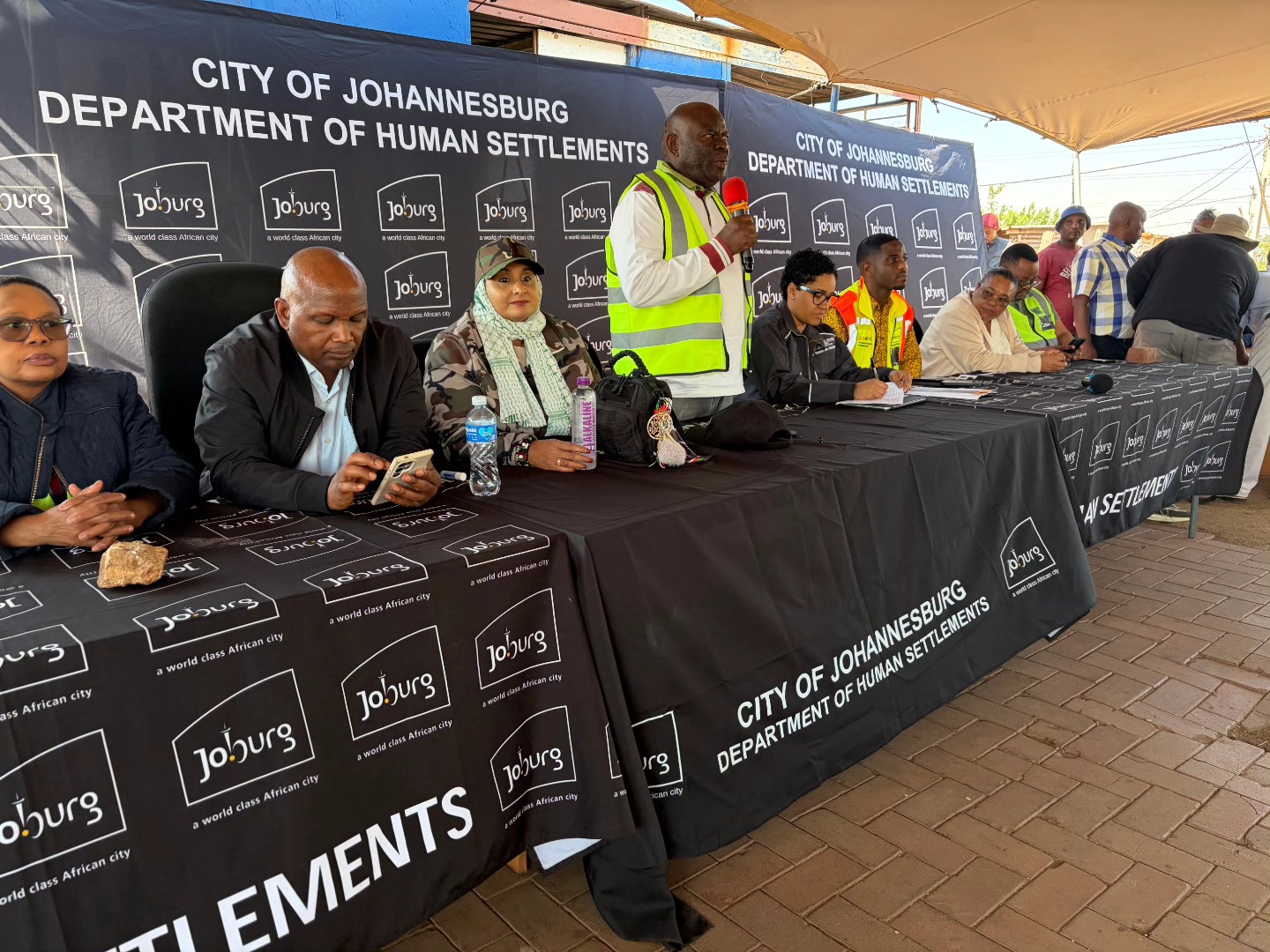
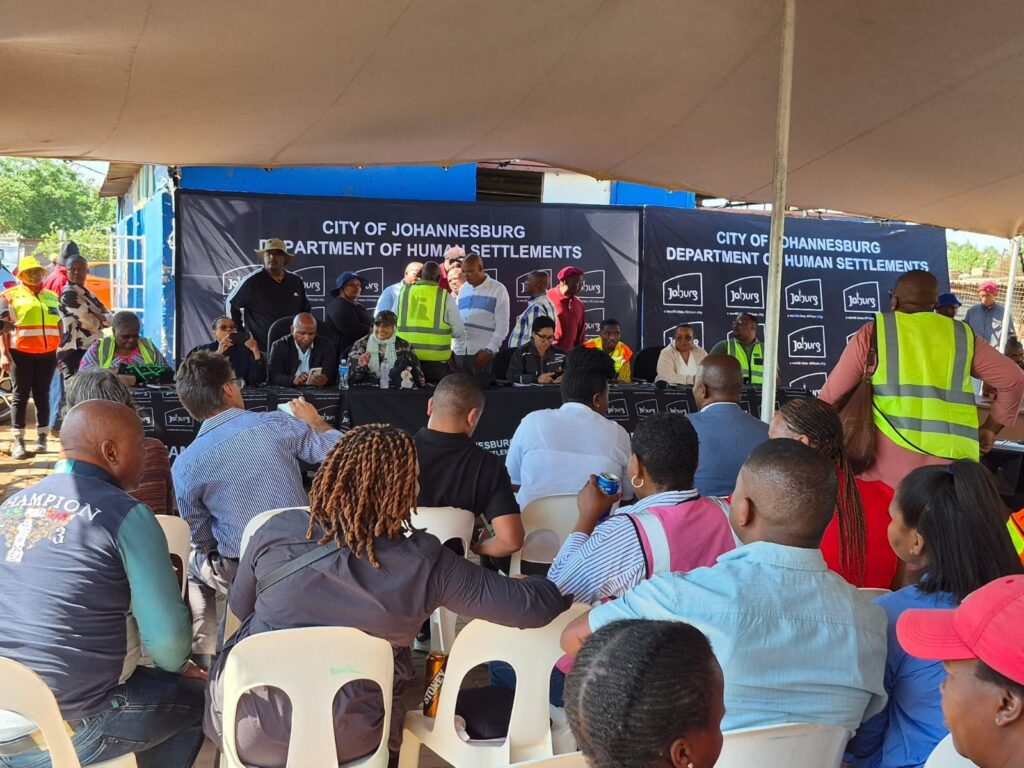
 The Parliamentary Portfolio Committee on Human Settlements has reaffirmed its commitment to improving living conditions in informal settlements following a recent oversight visit to Slovo Park in Johannesburg. The visit follows a February engagement where the committee resolved to track progress on the long-delayed upgrades mandated by the 2016 high court ruling under the Upgrading of Informal Settlements Programme (UISP).
The Member of the Mayoral Committee for Human Settlements in the City of Johannesburg, Cllr Mlungisi Mabaso, highlighted the City’s focus on delivering essential services and improving safety in the area.
Efforts include the installation of solar-powered high-mast lights with integrated cameras and Wi-Fi. Johannesburg Water has committed to fast-tracking procurement for water services, while land acquisition for relocation has been completed. A verification process will ensure qualifying households are allocated stands at Southern Farms.
“As government, it is our mandate to listen to the community and respond to their needs. Slovo Park has been left behind for too long, and today, before its residents and the Committee, we reaffirm our commitment to restoring its dignity,” said Cllr Mabaso.
Gauteng MEC for Human Settlements Tasneem Motara outlined three key interventions:
- Road Infrastructure: A Service Level Agreement with the Johannesburg Roads Agency (JRA) will see six kilometres of roads graded by November.
- Community Facilities: Plans are underway to refurbish the existing community hall and construct a new one using housing subsidies.
- Township Formalisation: Town planning responsibilities have been transferred to the City of Johannesburg, paving the way for full formalisation.
Committee Chairperson Nocks Seabi emphasised that “implementation—not promises—will bring comfort”, reaffirming Parliament’s role in ensuring accountability and community participation.
Slovo Park’s journey reflects a broader national effort to restore dignity through in-situ upgrades, as envisioned by the UISP. With over 2 500 residents awaiting relocation and 374 households already identified, the project marks a decisive step towards inclusive urban development.
Written by S’duduzo Dludla