

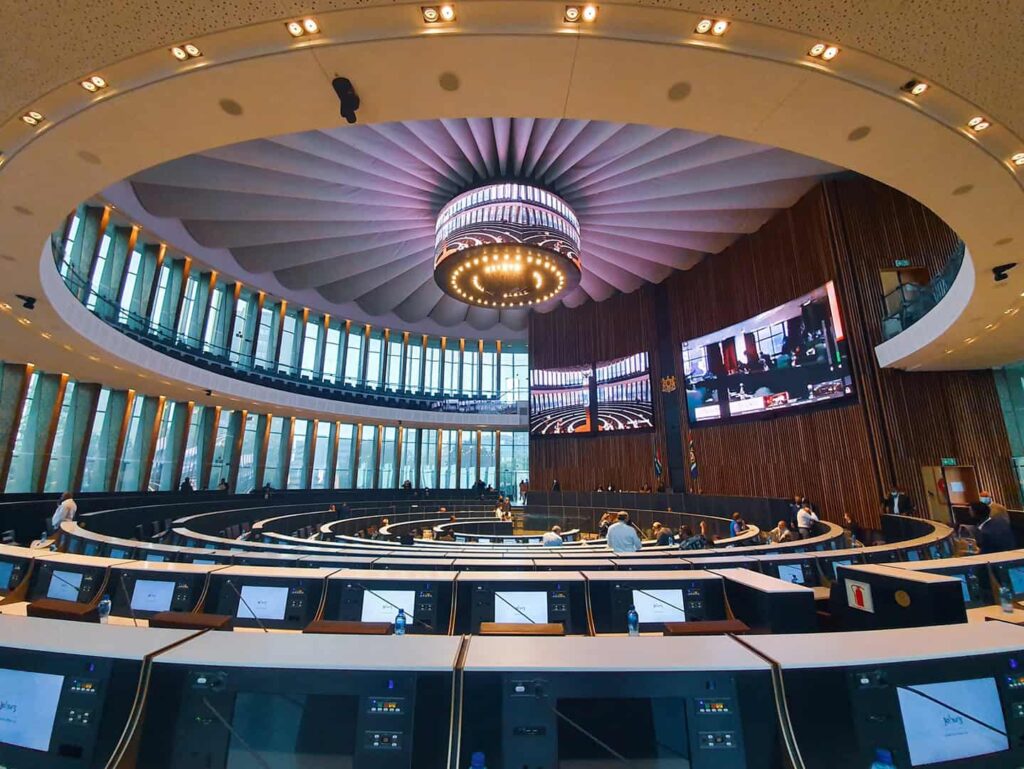








This came out during Mayor Phalatse’s post-State of the City Address (SOCA) stakeholder engagement with tertiary institutions on Tuesday, 11 May 2022, at the Metro Centre in Braamfontein, which was facilitated by Dr Thina Nzo from the Public Affairs Research Institute.
Mayor Phalatse the City of Johannesburg was poised to become a digitised city. She said the smart city planning has begun for the new IT systems to manage online leave, employee engagement, learning and development, recruitment, performance management, plans to introduce digital health records to mention just a few.
“We believe the universities can help define what does a smart City in Joburg looks like. We all recognise that we need to do smart policing, smart recruitment, smart procurement etc. We recognize we need academia to come up with solutions for our problems,” she said.
Dr Kagiso Pooe from Wits said residents have ran out patience as a result of service delivery delays.
“The rush to get to smart city is liked by South Africans, but we need strong institutions to back it up … the city’s structure must reflect the uncertain future going forward,” said Dr Pooe.
According to Professor Michael Rudolph from the University of Johannesburg, about 37% of residents in Joburg were food insecure. He suggested innovative and practical ways to ensure that there was nutrition and food security which include having food gardens on many opens spaces like parks, clinics and roof tops.
Mike Makwela from an NGO called Planact challenged the city to bring on board the community to monitor services and projects in a systematic way. “We need community-led accountability, it can’t be only the city. They should be eyes and ears of the city on the ground,” said Makwela.
University of Johannesburg’s Professor Pat Naidoo said the university was a global gateway to intellectual wealth which the city employees can gain from.
“We have a curriculum that deals with topics like adaptation, climate change, sustainable development, green economy which are present day topics, which we should be grappling with and finding creative and innovative solutions to go forward,” said Prof Naidoo.
Unisa’s Professor Dirk Kotze said the city’s coalition government was a case study of how future local governments would be run going forward. “We believe that South Africa needs change and that no single political party can achieve that change alone,” said Prof Kotze.
Wits School of Governance’s Themba Maseko said he hoped the coalition government would allow for the professionalism of local government.
Written by Nkosana Lekotjolo