



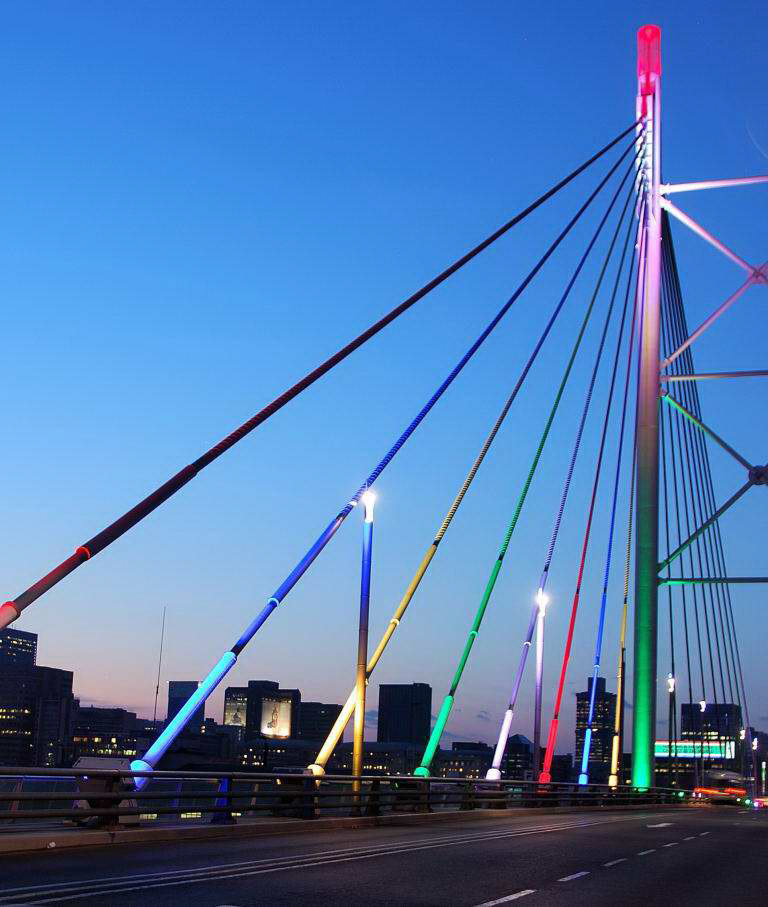

Shifts in the history of Johannesburg since 1994

The City of Johannesburg has undergone significant restructuring since the advent of democracy. Key milestones include the adoption of the visionary strategy “Joburg 2040” strategy document aimed at driving smart and inclusive growth for the city.
The city’s transformation involved merging fragmented local authorities, extending municipal boundaries, and implementing financial reforms.

In 1995, various local authorities were amalgamated to form four councils coordinated by a central metropolitan council under a single tax base. To support this tax base, the municipal boundaries of Johannesburg were extended to include Sandton, Randburg, Soweto, Alexandra and Orange Farm.

However, this system was still highly fragmented, and much duplication took place. By the 1997/1998 financial year, the effects of this fragmentation were being keenly felt, with the City experiencing a R300-million deficit, a R405-million overdraft and a negligible capital expenditure budget.

A new approach was required and, in 1999, a city manager was appointed and Egoli 2002, a three-year plan to turn the City’s finances around, was devised.

In 2000, Johannesburg was restructured to become a single metropolitan authority and elections were held for an executive mayor and unified local government. Again, the local municipal boundaries were expanded, this time to include Modderfontein and Midrand.

The creation of an executive mayor’s office and the adoption of Joburg 2040 have contributed to Johannesburg’s success in building a stable economy and improving residents’ quality of life. As a major economic hub, Johannesburg outperforms other cities in terms of GDP contribution and standard of living.

The City of Johannesburg has implemented various strategies to address the multifaceted challenges it has faced since the dawn of democracy. While progress has been made, the scale of the issues often outstrips the pace of solutions.

Joburg’s history can be framed around the legacy of its successive mayors since 2000:

1

Amos Masondo’s Leadership (2000-2011)

  • Masondo, as the first post-apartheid mayor, focused on infrastructure development, poverty alleviation, and public transportation improvements.
  • Major projects included road upgrades, most noticeably in Soweto, housing initiatives, and community centres.
2

Parks Tau’s Green Initiatives (2011-2016)

  • Tau emphasised environmental sustainability.

  • He launched the “Corridors of Freedom” project to enhance public transport and urban planning.

  • He also strengthened efforts to reduce the crime rate.

3

Herman Mashaba’s Business Approach (2016-2019)

  • Mashaba, a businessman, emphasised service delivery and accountability.
  • He advocated for private sector involvement in city management, including inner city regeneration.
  • His tenure saw a focus on small business support.
4

Geoff Makhubo’s Financial Transparency (2020-2021)

  • Makhubo worked on financial stability and transparency.
  • He addressed corruption allegations within the city administration.
  • He also supported local economic development.
5

Jolidee Matongo’s Brief Tenure (2021)

  • Matongo’s term was cut short due to his untimely passing.
  • He advocated for youth empowerment and continued service delivery improvements.
6

Dr Mpho Phalatse’s Historic Role (2021-2022)

  • Dr Phalatse became the first black woman mayor.
  • She prioritised social services and community development.
  • She was removed from office by a vote of no confidence.
7

Dada Morero’s Legal Challenges (2022)

  • Morero briefly held the mayoral position.
  • He focused on housing and infrastructure projects.
  • He also advocated for inclusivity and community participation.
8

Thapelo Amad’s Short Stint (2023)

  • He was elected mayor through a coalition government.
  • He resigned after three months for undisclosed reasons
9

Kabelo Gwamanda’s Brief Term (2023-2024)

  • Gwamanda took the reins at a difficult time for the city
  • His health issues during debates added to the challenges.
  • Ultimately he resigned, leading to Morero’s second term.

Johannesburg’s history reflects a dynamic blend of leadership, challenges, and growth.

Infrastructure Development

Public Transport

The Gautrain rapid rail system is a prime example of significant infrastructure investment. Bus rapid transit (BRT) systems have also been introduced.

Water and Sanitation

The city has invested in upgrading water and sanitation infrastructure, although challenges persist, particularly in informal settlements.

Energy Infrastructure

While load shedding has been a major challenge, the city has explored alternative energy sources and energy efficiency measures.

Crime and Safety

Increased Policing

The Johannesburg Metropolitan Police Department has been bolstered with additional resources and personnel.

Community Policing

Efforts to involve communities in crime prevention have been intensified through neighbourhood watches and community policing forums.

Social Crime Prevention

Addressing underlying social issues like poverty and unemployment is seen as crucial to reducing crime rates.

Urban Renewal and Housing

Redevelopment Projects

The city has undertaken various urban renewal projects to revitalise inner city areas and attract investment.

Housing Development

Affordable housing projects have been implemented to address the housing backlog, although the demand continues to outpace supply.

Informal Settlement Upgrading

Efforts have been made to improve living conditions in informal settlements through basic service delivery and infrastructure development.

Service Delivery and Governance

Improved Service Delivery

The city has implemented systems to monitor service delivery and address complaints more efficiently.

Corruption Prevention

Anti-corruption measures have been strengthened to enhance public trust in the government.

Citizen Participation

Efforts to increase public participation in decision-making have been made through platforms like public hearings and online engagements.

Challenges and Way Forward

Despite these efforts, Johannesburg continues to face significant challenges, including:

Resource Constraints

Limited financial resources hinder the pace of development and service delivery.

Rapid Urbanisation

The city's rapid growth puts pressure on infrastructure and social services.

Political Instability

Changes in political leadership often disrupt service delivery and hinder long-term planning.

To overcome these challenges, Johannesburg needs to:

Prioritise Strategic Investments

Focus on projects with high impact on economic growth, job creation, and quality of life.

Strengthen Partnerships

Collaborate with the private sector, civil society, and other stakeholders to leverage resources and expertise.

Improve Governance

Enhance transparency, accountability, and efficiency in the city administration.

Invest in Human Capital

Prioritise education, skills development, and youth empowerment.

By addressing these issues comprehensively, Johannesburg can build on its strengths and become a more equitable, sustainable, and prosperous city.

Search

Looking for something? type in the search box below, and we will try to find it for you.