







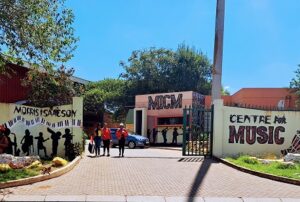
Before budding musicians walk through the corridors and concourse of the Morris Isaacson Centre for Music, they are greeted by a kaleidoscope of bursting colour from the murals at the entrance. Gripping conversations and laughter from music students carrying various instruments reverberate around the centre, filling the atmosphere. The pupils are eagerly awaiting the commencement of their assigned classes.
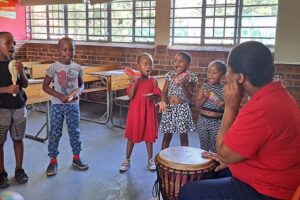 It is a rare sight to see parents encouraging their children to learn music, let alone staying all day to express their support. It is obvious that a new day has dawned in the vibrant Soweto community of Jabavu.
As the nascent musicians proceed through the walkways of the centre, there is an ensemble filling the air with harmonic melodies.
It is musical art all around, as the sound of a better tomorrow rings adjacent to the historical landmark in the Morris Isaacson High School.
“We strive to create a safe space to get young children off the streets and expose them to music that ignites development in their social skills,” says Lungile Zaphi, the musical director at the Morris Isaacson Centre for Music.
Zaphi started her journey with the centre in 2018 as an administrator and proceeded to be the director in 2020. She was born and bred in Mofolo, Soweto and has worked for a range of cultural institutions in Johannesburg, completing her musical residency in France.
“If you do not have the capacity to love your community, you won’t have the capacity to love yourself,” Zaphi says, adding that it was through self-love that she found the willpower to come back home and serve her community by upskilling them, creating opportunities, and planting seeds of hope.
“It is not just about the students learning the instruments. All the skills that come with running the centre — punctuality and the parents’ involvement in their children’s learning experience — have improved the students’ social development, interpersonal skills, and school life. It is easy to build a community through inclusivity, acceptance, and compassion amongst students, parents, and teachers,” adds Chris Bishop, another musical director.
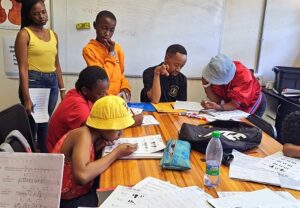 The Morris Isaacson Centre for Music is a music education institution built in 2009 in Jabavu, Soweto, but only started operating in 2011.
The centre was established through a joint initiative between Mendel Kaplan, a South African Jewish philanthropist and community activist, and Music Is a Great Investment (MIAGI), a South African non-profit organisation dedicated to providing high-quality music education to underserved populations.
The centre is named after Morris Isaacson High School, in whose premise it is located, which played a significant role in the 1976 Soweto Uprising against apartheid.
The music centre boasts a concert hall that seats up to 320 people, eight studios, a library, and a media room. It is modelled on the Buskaid system, which emphasises intensive training in both individual and group settings and has been successful in producing talented young musicians over the years.
One of the centre’s main objectives is to run a functioning cultural institution that benefits the community, especially young children.
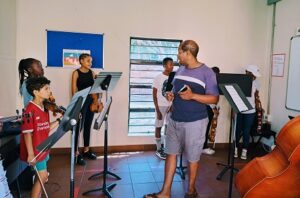 The centre uses the power of music to promote social harmony and socioeconomic upliftment by providing a range of programmes, including individual lessons, ensemble rehearsals, and performances.
It has received support from various international organisations and musicians over the last 10 years.
The Morris Isaacson Centre for Music has a staff complement of about 23 people, 126 students, and an early childhood development programme with over 200 pupils, all mentored by 15 teachers who are professional musicians and specialise in different instruments.
The centre provides high-quality music education to young people in Soweto, helping to develop a new generation of talented musicians who can contribute to the cultural life of South Africa and beyond.
They teach percussion, viola, cello, violin, music theory, brass, trombone, guitar, and a penny whistle, to name a few.
Their early childhood development programme is run offsite at four local creches and two local primary schools, which comprise children from ages 4 to 6 years. Youngsters between the ages of 7 and 18 enrol to take up musical instrument lessons.
The centre also offers an afterschool programme during the week where young people have one-on-one lessons with designated teachers. On Saturdays, the centre hosts support classes in which students sit down and learn together.
They offer theory classes and assemblies and will soon restart their choir classes, which introduce vocal and ear training.
They also have an inclusive public programme, Ughubu, which was formulated by the centre management for the children in the community and the children on the waiting list to still be able to learn music.
Sifiso Mbatha, a cello student who has been studying at Purcell School and was awarded a scholarship for a Bachelor of Music at the Royal Northern College of Music, is one of the centre’s proudest alumnus. Another alum, Njabulo Nxumalo, is a local of White City, Jabavu. He is currently pursuing professional musical studies at the University of Stellenbosch in the Western Cape. Nxumalo was recently awarded the position of classical bassist at the Cape Town Philharmonic Orchestra.
Another success story from the school is Kamogelo Maraba, who also plays cello and is currently studying at the Royal Birmingham Conservatoire.
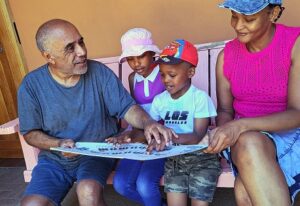
Zandile Lesibo, an aunt to two students enrolled at the facility, says her niece and nephew lost their mother in 2021, and during their grief, the Morris Isaacson Centre for Music provided the children with family outside of their immediate home.
 “The children received overwhelming love and support from the community at the centre. This music programme allowed them to grow through their grief and focus on their studies. It shifted their focus from the pain of losing their parents to improving their self-esteem, excelling in school, and healing,” Lesibo explains.
Zaphi says during the middle of March 2020, things shifted dramatically for the music centre as South Africa was struck by the global Covid-19 pandemic. Through the centre’s human development curriculum, they managed to maintain an outstanding record of teaching, nurturing their learners during the Covid-19 lockdown.
“The pandemic presented some challenges but has highlighted opportunities for the centre to redirect to e-learning,” she says. The centre introduced online weekly classes from 25 April 2020 to mid-March 2021, when Covid-19 restrictions were eased.
Zaphi says the shift to e-learning proved beneficial, and they are flexible enough to adapt their lessons to any challenge they face. “Through the online series, the centre kept in touch with its community by means of virtual interviews with prospective students, online concerts, and online competitions. The live jam sessions gave our learners a platform to showcase their hidden talents. It also encouraged them to develop their digital marketing skills.”
She says the interviews that were hosted weekly during the pandemic enabled students to share their experiences on how Covid-19 had impacted their lives and how music was therapeutic.
The Morris Isaacson Centre for Music is run as an NGO, and receives financial assistance from various donors, including the National Arts Foundation, Business and Arts South Africa, and several other foundations, trusts, and corporate sponsors like the Rupert Music Foundation, Oppenheimer Memorial Trust, Bidvest, and the Nedbank Foundation. Cape Gate has been a key sponsor by financing the construction of the centre, including its operational costs.
 The centre prides itself on using music for storytelling, singing, and concerts such as the Black Music Archive, the Soweto Music Archive, and Imvuselelo, to teach and perform historical music.
Zaphi says this ensures the preservation of South African music and promotes local culture. The centre will also host a youth day celebration concert on the Saturday closest to June 16.
“We actively recognise the importance of the historical day by having a prize-giving ceremony honouring the highest achievers, the most committed, and those who have improved the most. It is all about the students for the students,” says Bishop.
The centre also hosts an annual lecture in partnership with its alumni and runs regular music workshops and concerts together with the likes of visiting artist Gabi Motuba to help propel growth and set alight the passion to pursue and commit to the study of music.
“We aspire to demonstrate that music is bigger than anyone and that no one can live without music,” says Zaphi.
She adds that the centre looks forward to engaging its alumni in acquiring the rights to the music that was used during the uprising so it can be incorporated into its curriculum. “Considering the space and environment the centre is in, it is of critical importance to preserve this history.”
The Morris Isaacson Centre for Music offers its services for R440 per year for children aged 4 to 6, and R1, 320 per year for those aged 7 to 18. Zaphi says the centre applies a low fee policy to ensure it reaches as many young people as possible to enable them to participate in the vast music industry.
“If our alumni don’t become musicians, they can become music teachers, publishers, copywriters, and music writers. Most of the time, we are teaching young people skills at a critical stage of their lives where they can hone them as they grow.”
Written by Mosa Khunou
12/04/2023