

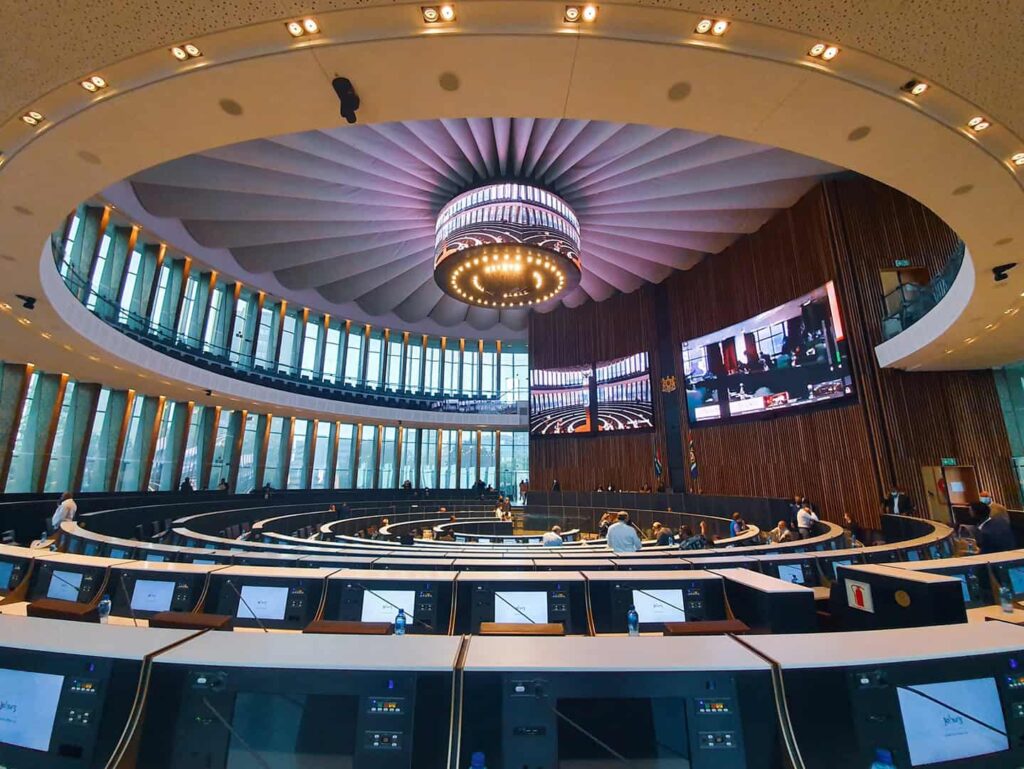







The City of Johannesburg’s Development Planning Department: Building Development Management Unit and the Environment & Infrastructure Services Department (EISD), in partnership with Sustainable Energy Africa (SEA), hosted a knowledge-sharing workshop on Net Zero Carbon (NZC) buildings on 4 September 2024 in Rosebank.
The workshop provided an opportunity for the city to showcase its progress and update stakeholders on the achievements in implementing the NZC buildings policy. The primary goal was to inspire action among all stakeholders to ensure policy compliance by 2030.
Industry experts from government and the private sector participated, sharing their insights on financing, designing, developing, and marketing NZC buildings. Among the participants were representatives from the Council for Scientific and Industrial Research (CSIR), Green Building Council of South Africa, International Finance Corporation, Trust for Urban Housing Finance, Solid Green, Absa, Standard Bank, Institute of Energy Professionals Africa, Johannesburg Social Housing Company, and other key stakeholders.
Broderick Chiloane, Building Control Officer from the city’s Development Planning Department, presented an overview of the progress made on the Green Building Policy. “The City of Joburg adopted the Green Buildings Policy, a landmark step in our commitment to sustainable urban development and environmental stewardship, in 2021.”
According to Chiloane, the policy requires all new buildings to be NZC by 2030, and all existing buildings to achieve net zero performance compliance by 2050. In collaboration with CSIR, SEA, and other stakeholders, the city has developed an energy efficiency checklist for evaluating submitted building plans in compliance with the policy and other regulations. This checklist is being integrated into the Construction Permit Management System, an online platform for submitting building plans, site development plans, and related applications. Further enhancements are being developed to enable online submissions for land use applications, law enforcement, and more.
“To ensure successful implementation and compliance with the policy, it is crucial that we foster collaboration and knowledge sharing among all stakeholders as we move towards this goal,” Chiloane emphasised.
Dr Coralie van Reenen from the CSIR said: “Net zero carbon buildings are those that have a zero carbon footprint, meaning any carbon emissions released are offset by reductions and removals elsewhere.”
She said achieving net zero carbon involves a combination of energy-efficient design and renewable energy sources, and noted the growing popularity of NZC buildings as more people aim to reduce their carbon footprint.
Olga Chauke, Head: Energy in the city’s EISD, outlined the green economy initiatives underway, saying: “With support from the South African National Energy Development Institute, the city has trained 200 Expanded Public Works Programme workers to conduct meter audits and measure floor spaces, with 676 buildings audited and 55 now officially registered.”
Chauke also detailed waste recycling partnerships that have created jobs for about 326 people and highlighted collaborations to train 200 technicians in solar panel and solar water heater installation.
The city is committed to green economy initiatives and is actively involved in sustainable projects across Johannesburg, striving to become a leader in sustainable building practices. The city believes that through collaboration, it can achieve the ambitious targets of the NZC Buildings Policy and create a sustainable, energy-efficient urban landscape.
Written by Dudu Lushaba
05/09/2024
To stay informed about the latest developments in the City, connect with us on our official social media platforms:
YouTube: https://www.youtube.com/@CityOfJoburgZA/videos
Joburg Pulse Radio: https://s3.radio.co/s349cd1429/listen